Home Energy Showdown: Solar Panels vs. Wind vs. the Grid — What Actually Saves You Money by Region
Every homeowner eventually hits the same wall: energy bills keep climbing, the news is full of solar ads, and your neighbor just put panels on their roof. But is any of it worth it for you, specifically? That depends enormously on where you live, what your roof looks like, and how long you plan to stay in the house.
At SearchBoth, we love putting options side by side and letting the numbers do the talking. So we stacked up residential solar panels, small-scale wind turbines, and plain old grid electricity across five major US climate zones. Here's what we found.
The Three Contenders, Briefly
Before we get regional, let's level-set on what each option actually involves.
Grid electricity is the default. You pay your utility company a monthly rate — currently averaging around $0.16 per kWh nationwide, though that swings wildly by state. No upfront cost, no maintenance headaches, but zero protection from rate hikes.
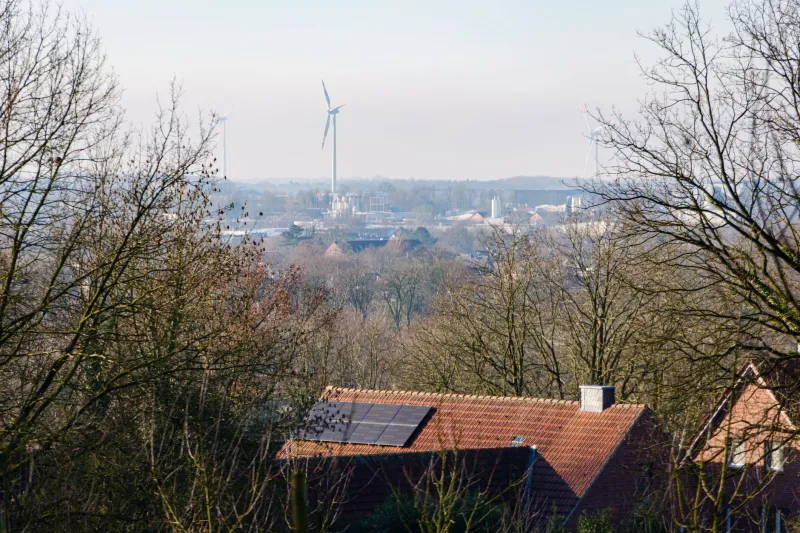
Residential solar panels typically run $15,000–$30,000 before incentives for a standard 6–10 kW system. The federal Investment Tax Credit (ITC) currently covers 30% of installation costs, which takes a serious chunk off the top. After that, your savings depend almost entirely on how much sun your roof gets.
Small residential wind turbines are the dark horse here. A home system (2–10 kW) costs roughly $15,000–$75,000 installed, and the same 30% federal tax credit applies. Wind is more niche — it works best in rural areas with consistent wind speeds above 10–12 mph. Most suburban homeowners won't even qualify.
Southwest: Solar's Undisputed Home Turf
If you live in Arizona, New Mexico, Nevada, or Southern California, solar is basically a no-brainer on the numbers alone. These states log 250–300+ sunny days per year, which means your panels are generating close to their rated capacity most of the time.
A 8 kW system in Phoenix, after the 30% federal credit and Arizona's additional state incentives, might net out around $18,000–$20,000. Average payback period? Roughly 6–8 years. After that, you're looking at 15+ years of dramatically reduced or near-zero electricity bills. Some homeowners in this region report saving $1,500–$2,000 annually once the system is paid off.
Wind doesn't really compete here — the Southwest is hot and often calm. Grid power is reliable but expensive in peak summer months when AC runs nonstop. Solar wins this zone, and it's not particularly close.
Pacific Northwest: Cloudy Days Change the Math
Seattle gets a bad rap for rain, but solar still works — just less efficiently. The region averages closer to 150–170 sunny days annually, which pushes payback periods out to 10–14 years for solar. That's still within the lifetime of a quality panel system (typically warrantied for 25 years), but the margin shrinks.
What makes the Northwest interesting is hydroelectric grid power. Washington and Oregon residents often pay some of the lowest electricity rates in the country — sometimes under $0.10 per kWh — because of all that dam infrastructure. When grid power is that cheap, the financial case for solar gets murkier fast.
Wind can be viable in coastal and rural areas of Oregon and Washington, but small residential turbines still face permitting hurdles and HOA restrictions in most neighborhoods. For most Pacific Northwest homeowners, sticking with the (cheap, clean) grid while monitoring solar costs as prices drop further is a defensible strategy.
Great Plains: Wind's Moment to Shine
Kansas, Nebraska, Oklahoma, the Dakotas — this is where wind energy stops being a novelty and starts being genuinely competitive. Average wind speeds across much of this region hit 12–15+ mph, which is the sweet spot for small turbines to generate meaningful output.
A rural homeowner in western Kansas with enough land and no HOA restrictions might install a 5 kW turbine for around $30,000–$40,000 before the federal credit. After the 30% ITC, you're at roughly $21,000–$28,000. In areas with consistent wind, that system could generate enough electricity to cut annual bills by $1,000–$1,500, yielding a payback of around 14–20 years.
Solar still works on the Plains — there's plenty of sun — but wind can be a complementary or even primary option for rural properties where turbine placement isn't restricted. Urban and suburban Great Plains residents are mostly out of luck on wind, but solar remains solid.
Southeast: Heat, Humidity, and Hidden Costs
Florida, Georgia, the Carolinas — lots of sun, which should mean great solar returns. And in some ways it does. Florida averages around 230 sunny days per year, and the state has decent net metering policies that let you sell excess power back to the grid.
But the Southeast has complications. Hurricane-rated installation adds cost. Humidity accelerates wear on some components. And several large utilities in the region have historically lobbied to limit net metering credits, which affects your return on investment.
Still, a Florida homeowner can realistically see a 9–12 year payback on a quality solar system, with strong long-term savings given how hard AC runs from May through October. Wind is largely impractical in most of the Southeast outside of coastal zones.
Midwest & Northeast: The Balanced Case
Chicago, Cleveland, Boston — these markets are somewhere in the middle on sun exposure but often have high grid electricity rates (Massachusetts averages over $0.22 per kWh), which actually improves solar's financial case even with fewer peak sun hours.
In Massachusetts, the combination of the federal ITC, state rebates, and SMART incentive programs can bring a solar system's payback down to 7–10 years despite the cloudy winters. New York has similar incentive stacking. The lesson: don't just look at sunlight hours. Look at your current electricity rate and what state-level programs are available.
The Bottom Line: Compare Before You Commit
Here's a quick cheat sheet based on our analysis:
| Region | Best Option | Payback Estimate |
|---|---|---|
| Southwest | Solar | 6–8 years |
| Pacific Northwest | Grid (for now) | N/A |
| Great Plains (rural) | Wind or Solar | 14–20 years (wind) |
| Southeast | Solar | 9–12 years |
| Midwest/Northeast | Solar (with incentives) | 7–10 years |
No single answer fits every household. Your roof's orientation, local utility rates, available incentives, and how long you'll own the home all feed into the real number. The 30% federal tax credit won't last forever — it's currently scheduled to step down after 2032 — so timing matters too.
The smartest move before signing any contract? Get multiple quotes from installers, run your address through the EnergySage Marketplace or NREL's PVWatts calculator, and compare what your actual utility would cost over the same 10–20 year window. That side-by-side view almost always tells a clearer story than any sales pitch.
That's kind of our whole thing here at SearchBoth — because comparing everything really is how you decide smarter.